The spirit of giving is evident on Wesley campuses. Residents routinely visit school classrooms and participate in charitable work. At Wesley Lea Hill, they also volunteer at the Auburn Food Bank.
Sharing the story
Lea Hill Resident Council Chair John Noerr first learned about the Auburn Food Bank volunteers during a conversation with other residents. He thought we could all take inspiration from this important work.
“I’m just the guy who wanted to make folks aware of these volunteers’ efforts,” he says. “I thought sharing their stories would spark others to pitch in and lend a hand whenever and wherever possible.”
Marlene Feliciano, the campus’s Director of Resident Engagement, says she isn’t surprised to see Wesley residents giving their time for others. A 30-year Auburn resident, Marlene also understands the role the Auburn Food Bank plays in assisting those in need.
“Residents are very generous and have a huge heart for helping others,” she says. “The Food Bank does wonders for our community and provides for many of our neighbors and friends in this area. We have many residents who take great pride in all that is collected each month for the food bank.”
Becoming part of the fabric of giving
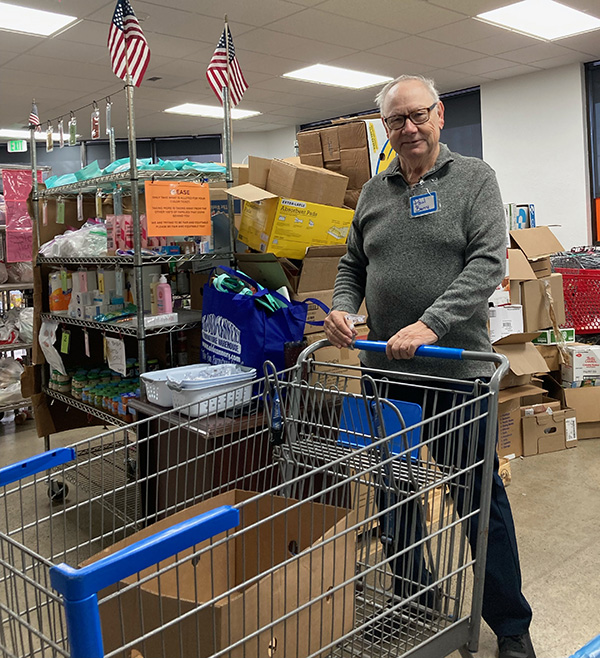
Since becoming a Brownstone resident last year, Paul Berry has found a common thread among residents. Showing empathy toward others through good work and attitude is inherent to the nature of Wesley residents. Paul volunteers by handing out credentials, restocking the meat section and performing other tasks for the food bank.
About Paul
A former project construction manager for the cities of Seattle and Auburn, Paul describes himself as someone who prefers to actively participate in important causes. He’s enjoyed managing the construction of several area fire stations, establishing the infrastructure for several state political conventions and volunteering at the food bank.
“I started managing projects like the Seattle Center before there was an actual profession, or a degree, for what I was doing,” he says. “Now you can major in this field at university. I’ve always felt like I wanted to do something to assist a cause rather than write a check. When I learned from another resident about her work at the Auburn Food Bank, I decided to go check it out to see if it was a fit. It was.”
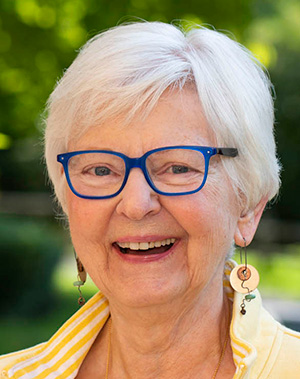
That fellow resident is Kay Crowe, who has modeled for Wesley and volunteers at Wesley Lea Hill events. She’s also a fan of pickleball.
Paul and his wife, Nancy, the former director for pastoral care at Bellevue First Methodist Church, had planned to move to a retirement community. They were familiar with Wesley and impressed by the sense of community. It’s an impression formed because of their fellow Brownstone residents by the ethos of involvement off campus through organizations like the food bank. He notes that residents at both Brownstones regularly contribute items to the food bank.
“Everyone here has a story to share that is interesting,” Paul says. “Regardless of background, there is a philosophy here of empathy and understanding that I find very impressive.”
How the food bank operates
The food bank operates in the reverse of a traditional grocery store, where one acquires goods and then checks out at the end of shopping. Food bank guests check out first. They receive a credential indicating the volume and type of food to be selected, move through the store and collect items from meat to vegetables to dairy based on family size, living situation and other factors.
Paul explains the credential system to newcomers, affixes the credential form to their food carts and gives each visitor a smile and a positive message.
“I have many meaningful conversations all day with people at the food bank,” he says. “I also walk close to four miles during my five-hour shift, retrieving food carts, pointing out specific items in each aisle for visitors and restocking.”
The Auburn Food Bank provides people and families with meat, dairy, fruits, vegetables and other necessities, as well as items like pastries and frozen pizza. Paul doubled his volunteer days during the recent government shutdown, when SNAP benefits were in jeopardy, and people’s payments stopped arriving. These conditions increased pressure on food banks across the country.
“We typically issue 200 credentials a day,” he says. “But those credentials feed as many as 800 people.”
Helping in other ways
Paul is often found setting up and taking down chairs and tables for Brownstone events. It could be for the weekly resident gatherings or the Bible study classes his wife will lead in December. “When you listen to the stories here, you find that what I am doing is not unique at all,” he says. “Everyone has stuff going on; it’s the nature of folks who live here. We work hard to take care of others as well as each other.”